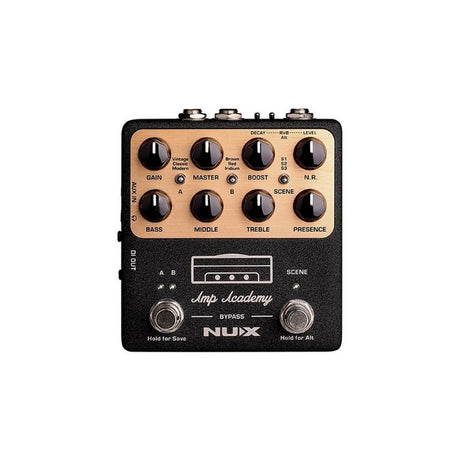
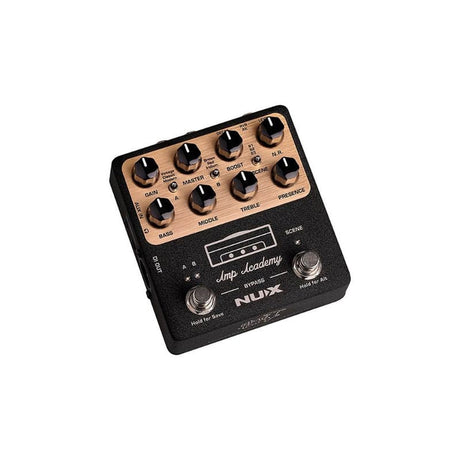
NUX NGS-6 Verdugo Series AMP ACADEMY guitar amplifier simulation effect pedal
In stockRegular price €179,00Unit price-
NUX NMA-3AAP Monarch Series – Compact Guitar Amp Modeler & Profiler
In stockRegular price €269,00Unit price-
-
-




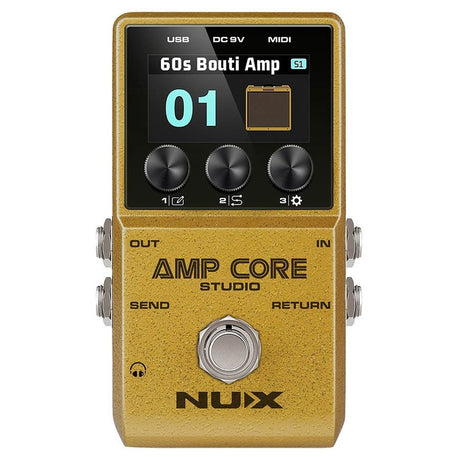
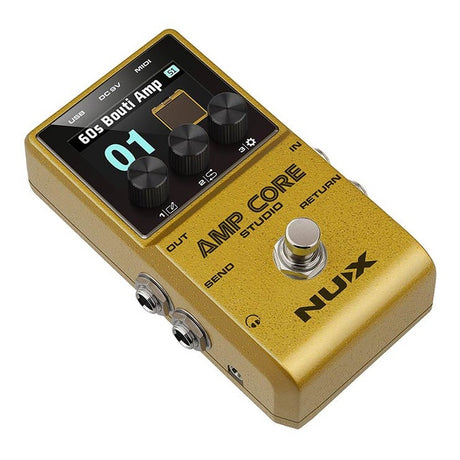


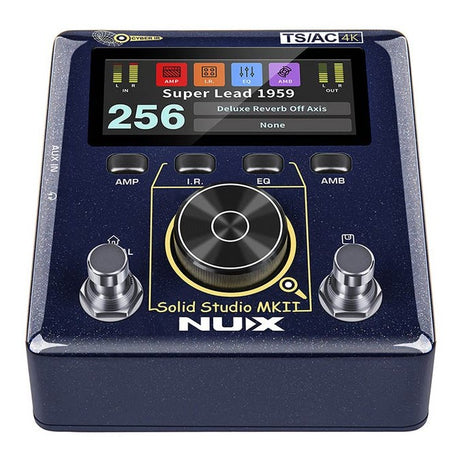


Amp modeler pedals
Amp modeler pedals
Amp modeling pedals emulate the sound of complete guitar and bass amplifiers. You get the tone of familiar tube amps, transistor amps, and speaker cabinets in one compact pedal. Switch between different amp types with the touch of a button, ideal for rehearsal spaces, studios, and live performances.
What does an amp modeler pedal do?
An amp modeler uses digital signal processing to simulate the behavior of a real amplifier. The pedal models the preamp, power stage, and often a cabinet as well. This makes your instrument sound as if it's going through a real amplifier and speaker, even when playing directly into a mixer or audio interface.
- Realistic amplifier simulation without a physical amplifier.
- Multiple amplifier types in one pedal.
- Cabinet simulation or IRs for accurate speaker sound.
- Suitable for both live and studio recordings.
Why amp modeler pedals are popular
- You can play directly into PA or audio interface without a microphone.
- You have one compact rig instead of multiple amplifiers.
- You can quickly switch between clean, crunch, high-gain and special sounds.
- You play quietly at home without losing quality.
- You use presets to quickly switch sounds during performances.
Types of amp modelers
Amp modelers vary in complexity, features, and connectivity options.
- Compact modelers with a few amplifiers and simple operation.
- Advanced modelers with many amps, IRs, deep editing and multiple outputs.
- Floor units with footswitches, expression and live control.
- Standalone preamp modelers that primarily simulate the preamp and cab.
Choosing the Right Amp Modeler Pedal
Pay attention to the connections and how you want to use the pedal.
- Choose a model with IR support for the most realistic cab simulation.
- Choose stereo outputs if you want a wide and spacious sound.
- Make sure you have enough footswitches if you use a lot of presets live.
- Check if the pedal has a headphone output for silent playing.
- Check whether deep editing is possible via PC or app.
Tips for better modeling results
- Use good IRs or cab simulations for a realistic speaker sound.
- Tune your presets to equal volumes, especially for live use.
- Use a FRFR speaker if you're using the pedal as a full rig.
- Add an EQ at the end of your chain to fine-tune your sound.
- Create multiple presets for different rooms or stages.
FAQ
Can an amp modeler replace a real amp?
Yes, many players use modelers as a complete rig. Thanks to the preamp, power amp, and cab simulation, you can play right away without a physical amplifier.
Do I still need a speaker cabinet?
Only if you want to. With cab simulation or IRs, you can play directly to PA, studio monitors, or headphones.
Is there noticeable latency among modelers?
Modern pedals have very low latency, usually not noticeable when playing live.
Can I combine drive pedals with a modeler?
Yes, place your drive in front of the modeler for the most natural result.
Does an amp modeler also work with bass guitar?
Yes, many modelers include bass amps, cabinets, and EQs that work perfectly with bass.