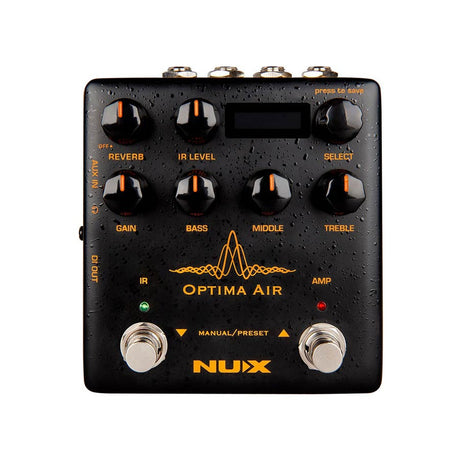
NUX NAI-5 Effect Pedal Dual Acoustic Guitar Simulator OPTIMA AIR
BackorderedRegular price €189,00Unit price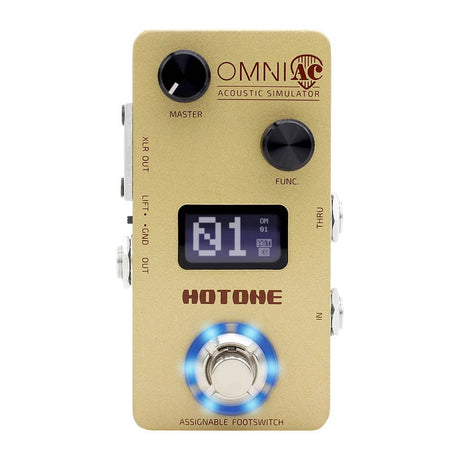
HoTone OMP-5 Acoustic Simulator Pedal OMNI AC, with 9V PSU
In stockRegular price €170,00Unit price
acoustic guitar simulator pedals
Acoustic guitar simulator pedals
Acoustic guitar simulator pedals transform the sound of an electric guitar into a realistic acoustic tone. They replicate the resonance, clarity, and body of acoustic guitars without having to switch instruments. Ideal for live performances, studio recording, and players who want compact travel.
What does an acoustic guitar simulator do?
The pedal analyzes your electric guitar signal and applies digital filtering similar to the sound of acoustic guitars. Think body response, wood resonance, and the higher frequency range typical of steel-string acoustic guitars.
- Provides a clear, acoustic base sound.
- Adds extra clarity and attack.
- Adds resonance and body normally only heard with acoustic guitars.
- Works with any electric guitar.
Why an acoustic simulator is useful
- You don't need to carry a second guitar to gigs.
- You switch instantly between electric and acoustic sounds.
- You have more control over volume and feedback than with an acoustic guitar.
- Perfect for bands that switch a lot between styles.
- Easier and more stable to amplify than a real acoustic guitar.
Types of acoustic simulator pedals
There are different types, each with a different approach to the acoustic sound.
- Simple simulators with basic body and tone settings.
- Advanced simulators with multiple acoustic guitar profiles.
- Simulators with EQ to precisely shape your acoustic sound.
- Preamp + simulation for players who want to go straight into a PA.
Choosing the right pedal
When selecting the best acoustic simulator, consider these points:
- How realistic you want the acoustic sound to be.
- Whether you want to be able to choose different guitar profiles.
- Whether you need an extra EQ for more control.
- Whether the pedal can be connected directly to a PA or audio interface.
- The build quality and switches for live use.
Tips for the best results
- Use the neck pickup for a more natural acoustic tone.
- Use a light compressor to stabilize dynamics.
- Add a subtle reverb to create depth.
- Make sure your electric guitar is tuned and intoned properly.
- Test the simulator through a PA or monitor, not just through your amplifier.
FAQ
Does an acoustic simulator sound just like a real acoustic guitar?
The sound is surprisingly close, especially in a band mix. A real acoustic guitar sounds a bit more natural solo, but a simulator is very convincing and practical.
Can I use an acoustic simulator with an amplifier?
Yes, but for the most natural result, play directly into PA, monitors, or an acoustic amplifier.
Does this also work with humbuckers?
Yes, but single coils usually give a slightly brighter acoustic result.
Do I need extra pedals?
Not necessary, but light EQ or reverb can further enhance your acoustic sound.
Can I also simulate nylon guitar with this?
Some pedals can do this, but most are aimed at steel-string acoustic guitars.