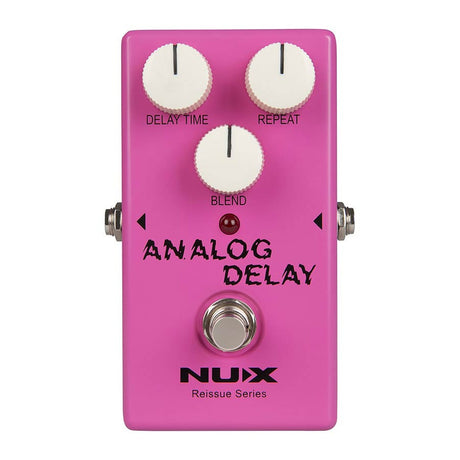
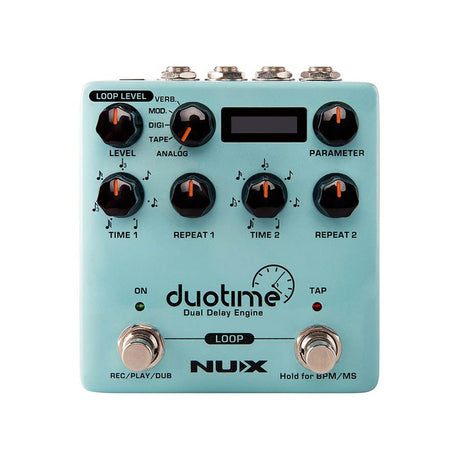
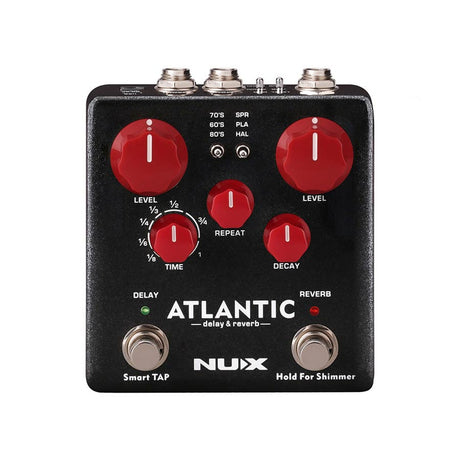
Delay pedals
Delay pedals repeat your guitar signal one or more times with an adjustable delay. This creates echoes that range from subtle ambiance to long, atmospheric soundscapes. Delay is one of the most commonly used effects for both electric and acoustic guitar. It adds space, depth, and ambiance to your playing without muddying your tone.
What exactly does a delay pedal do?
A delay pedal records your signal and plays it back after a set time. You control how often the repeat sounds, how loud it is, and how long the effect lasts. Depending on the pedal type, you get a warm, analog echo or a crystal-clear digital delay.
- Delay time determines the distance between the echoes.
- Feedback determines how many repetitions you hear.
- Mix determines how much original and how much effect you hear.
Why delay pedals are so popular
- You add space and depth without distorting your tone.
- You make solos fuller and more expressive.
- You create rhythmic patterns that make your playing more exciting.
- You build ambient soundscapes with long, floating repetitions.
Types of delay pedals
The sound and effect of delay vary by technology. The choice determines how warm, modern, or experimental your echoes will sound.
-
Analog delay for warm, dark and organic repeats.
-
Digital delay for clear and precise echoes.
-
Tap-tempo delay that lets you set the tempo live.
-
Modulated delay with a light chorus for extra movement.
-
Reverse delay for unique, backwards-sounding repetitions.
-
Multi-delay for multiple delay types in one pedal.
-
Looper + delay for recording and replays in one device.
Choosing the right delay pedal
When making your choice, consider style, application and ease of use.
- Choose analog if you're looking for a warm, vintage echo.
- Choose digital for sleek and modern repetitions.
- Choose tap tempo if you want to play live on the beat.
- Select stereo delay for wide and spacious sounds.
- Check out extra features like mods, trails, and presets.
Practical tips for better delays
- Add delay after drive and modulation pedals for a clear repeat.
- Use short delay times for rhythmic clean parts.
- Use long delay times for ambient and soundscapes.
- Use little feedback to keep your sound tight.
- Use stereo delay for a wide and spacious sound.
- Combine delay with reverb for a full, spacious effect.
FAQ
What is the difference between delay and reverb
Delay provides clear repetition. Reverb adds a general spatial sound without stray echoes.
Where do I place delay in my effects chain?
After drive, distortion, chorus, phaser, and flanger. This keeps the repetitions clear and controlled.
Can I use delay on acoustic guitar?
Yes, especially subtle delay creates a natural space and makes your acoustic tone sound wider.
What is slapback delay
A short, single echo often used in rockabilly, country, and blues. It thickens your sound without long repetitions.
Why does my delay sound messy?
Too much feedback, a delay time that's too long, or a mix setting that's too high will result in a muddy sound. Reduce one of these for more clarity.