-
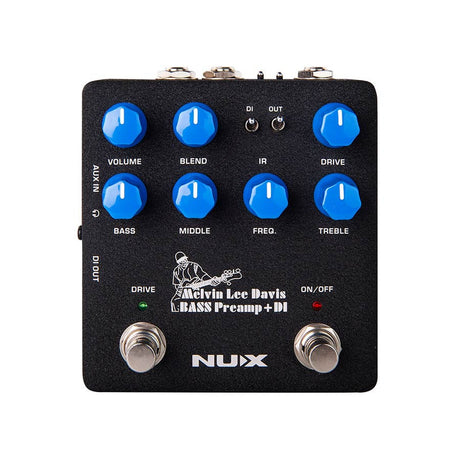
NUX NBP-5 Bass Preamp Pedal MELVIN LEE DAVIS Signature with DI
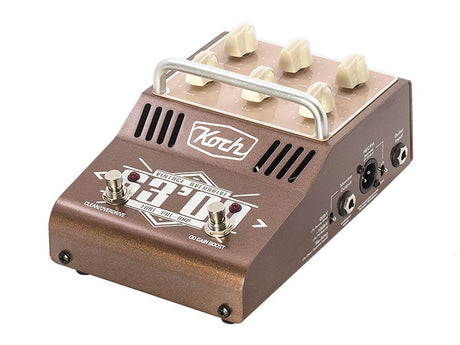
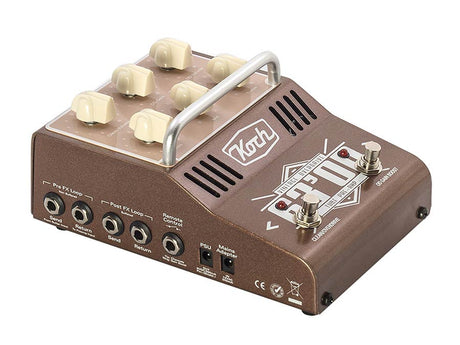
Low stock (2 units)Regular price €179,00Unit priceKoch 63'OD Preamp Pedal – 2-Channel Tube Preamp with Boost, FX Loop, and DI
BackorderedRegular price €460,00Unit price-
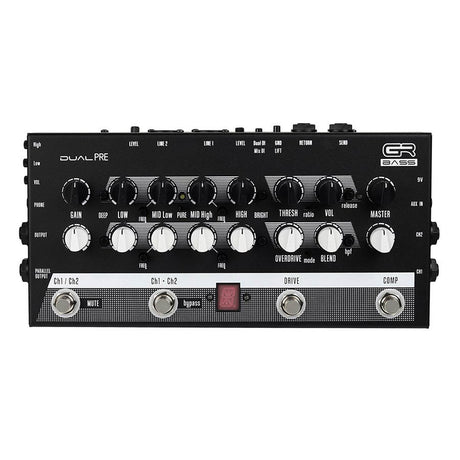 In stockRegular price €755,00Unit price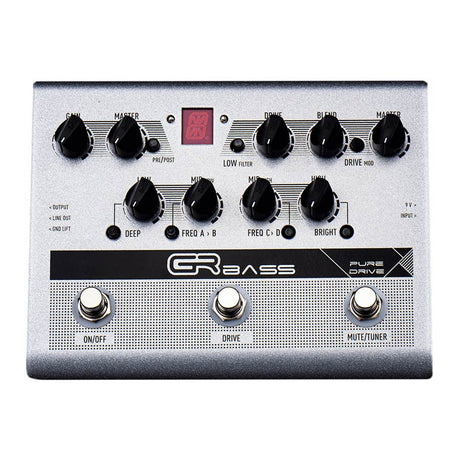
GRBass PureDRV preamp pedal with overdrive, 4-band EQ, tuner, DI, EFX loop, and line out
Low stock (2 units)Regular price €458,00Unit price




Equalizer pedals
Equalizer pedals
EQ pedals give you complete control over the frequencies of your guitar or bass signal. You can adjust the treble, bass, and midrange to shape your sound exactly how you want it. An EQ pedal is ideal for fine-tuning your tone in the mix, reducing unwanted frequencies, or emphasizing certain sound areas.
What does an equalizer pedal do?
An equalizer pedal splits your sound into different frequency bands. You control which bands to boost or cut. This allows you to make subtle adjustments or major changes to your sound.
- Boost bass for more warmth or body.
- Boost midrange tones to cut through the mix better.
- Add high tones for extra clarity and definition.
- Cut away problematic frequencies for a tighter sound.
Why EQ Pedals Are Indispensable
- You can tailor your sound precisely to any amplifier or room.
- You correct the sound of pedals that sound too dark or too sharp.
- You make your guitar more audible in a band mix without playing louder.
- You use EQ as a boost for solos or as a tone changer for rhythms.
Types of equalizer pedals
EQ pedals differ mainly in the amount of control and how precisely you can work.
- Graphic EQ with sliders for fixed frequency bands.
- Parametric EQ with adjustable frequencies for maximum precision.
- Multi-band EQ for detailed tone shaping.
- Bass EQ with frequencies tuned to bass guitar.
Choosing the right EQ pedal
Which EQ you choose depends on how detailed you want to shape your tone.
- Choose a 5- or 7-band EQ for your guitar. This covers the most important frequencies.
- Choose a parametric EQ for full control over specific sounds.
- Choose a bass EQ if you want to fine-tune low frequencies.
- Pay attention to noise level and true bypass to keep your signal clean.
Tips for better EQ results
- Start with small adjustments. A few dB difference can make a big difference.
- Use more mids if you want to cut through a band mix better.
- Cut instead of boost if you want a more natural result.
- Add a slight mid-boost for solos for added presence.
- Use EQ before drive for tone shaping and after drive for fine-tuning.
FAQ
Where do I place an EQ in my effects chain?
For tone shaping. After drive for precise tuning or as a clean boost.
Can I use EQ as a boost?
Yes, turn up the volume slider and decide for yourself which frequencies you want to emphasize.
Why does my sound suddenly sound better with an EQ?
An EQ removes problem areas and emphasizes the frequencies that make your guitar stand out. This results in a clearer, fuller sound.
Does an EQ work well with bass guitar?
Yes, especially a bass EQ. You get more control over low frequencies and can reduce muddiness.
What does Q factor mean in EQ
The Q factor determines how broadly or narrowly you adjust a frequency band. Narrow Q is precise. Wide Q is more subtle.